|
| View Online |
|
|
|
|||
|
|||||||||
|
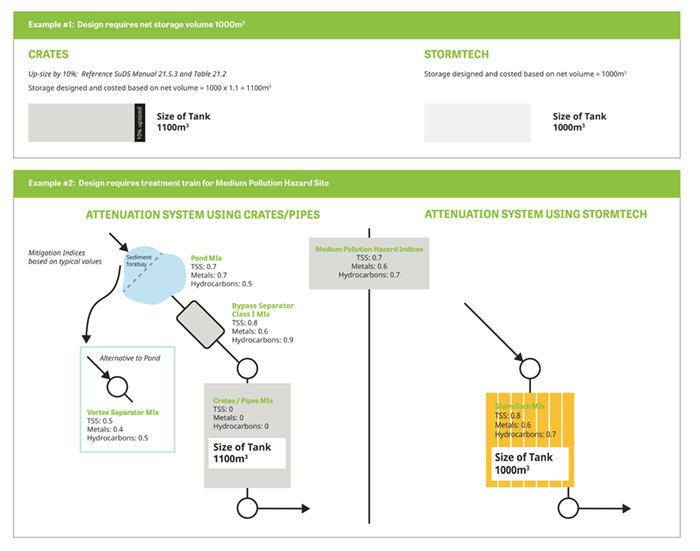
Recent and anticipated Government legislation suggests that water quantity and quality must be considered together when designing and costing SuDS attenuation and storm water management systems. This has significant impact on traditional solutions such as attenuation crates. First in terms of the size of the tank required and second in terms of the water quality treatment components needed in addition to the crate tank. |
|||||||||
|
|||||||||
|
|||||||||
|
|
|||||||||
|
Crate-based stormwater management systems may require an additional 10% upsizing to allow for volume depletion – many types are prone to silting and are difficult to clean. However, ADS StormTech does not need additional upsizing as inspection and maintenance is quick, easy and effective. |
|||||||||
|
|||||||||
|
Designing and supervising target volume storage Often, designs for stormwater management systems focus solely on the target storage volume. Designers do not routinely include the 10% upsizing when specifying a crate-based system or when a create system is proposed by the developer. If the designer or contractor opts for a crate solution, the 10% volume upsizing should be applied, – and re-costed – or the performance of the system may be compromised. If a manufacturer claims that their system is exempt from this guidance, evidence should be provided that the system can be completely and easily cleaned. Asset owners and adopting bodies should be assured that upsizing of crate-based systems is appropriately considered in the design and construction of SuDS attenuation systems. |
|||||||||
|
|
|||||||||
|
Water Quality When the design-focus is solely on target storage volume, there is a risk that the final system selection may affect the treatment train and the management of silt and other pollutants. Therefore, proper consideration needs to be given to both the service requirements of the system – can it be simply and effectively cleaned – and the impact on water quality. Attenuation crates, for example, will require additional water treatment components such as silt management and oil-water separation at additional cost. ADS StormTech, however, incorporates Isolator Row – an inbuilt water treatment device that is simple to clean, typically every 3 – 5 years with standard sewer cleaning equipment. With StormTech, potentially no additional water treatment components are required, thus providing cost savings. |
|||||||||
|
|||||||||
|
|
|||||||||
|
|
|
||||||||||||||||||||||||||||||
| Unsubscribe |